
Soundbooth
Soundbooth TheaterEntertainment
2.8311.00 Reviews
- Version
- 3.0.18
- Installs
- 100.00K
- Age Rating
- Teen
Screenshots
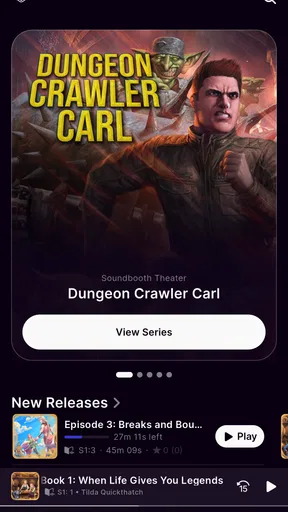
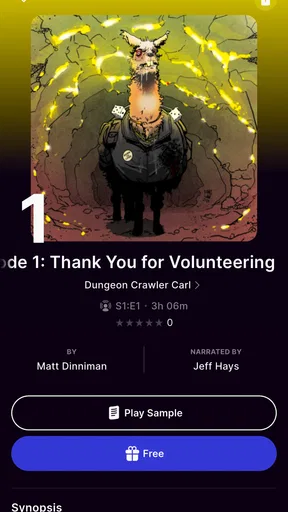
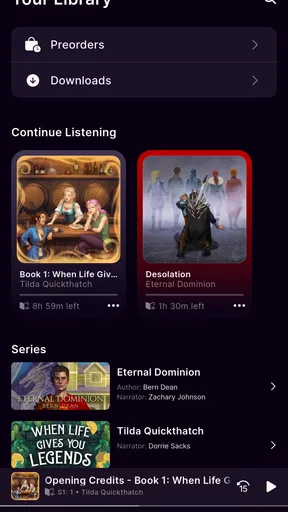
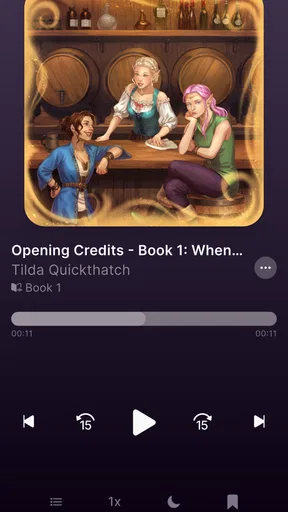
Our Review of Soundbooth
 Analysis by Appyee
I approached Soundbooth as an entertainment app for people who want more from listening than a plain spoken recording. Developed by Soundbooth Theater, it presents itself as a home for audiobooks and immersive audio stories, and that focus gives it a different feel from a general music player or a basic audiobook shelf. My overall impression is mixed but worthwhile: the idea is appealing, the free entry point lowers the risk, and the experience can be especially enjoyable when a story benefits from atmosphere. At the same time, the app’s modest average rating of 2.8 from around 600 ratings suggests that the experience has not worked equally well for everyone.
The important thing is to understand what you are choosing. This is not simply a utility for playing any audio file you already own. It is an entertainment destination built around Soundbooth Theater’s own presentation of spoken stories. That makes the catalog and listening style more important than a long list of technical controls. If you want a focused place to explore narrated fiction, it is worth a look. If you only need a dependable player for an existing personal library, a conventional audiobook app may be the more sensible choice.
How Soundbooth fits into an audiobook routine
I use Soundbooth most naturally as a deliberate part of an audiobook routine, rather than as something I leave playing whenever I have a spare moment. Choosing a story before a walk or a stretch of chores helps me give its performed style enough attention to make the atmosphere count. That habit also makes it easier to decide which productions are worth exploring further and which listening situations call for something simpler.
A free starting point with a paid layer
The app is free to install, which is a meaningful advantage when you are deciding whether immersive audio is actually your thing. You can try the general experience without committing to an upfront purchase. However, Soundbooth also includes in-app purchases ranging from $0.49 to $59.99 per item. That range tells me the free download should be treated as an entry point rather than a promise that every listening option is free.
I appreciate that distinction because it keeps the decision practical. You can begin by examining the available stories and deciding whether the presentation suits you before spending anything. The paid side may make sense for a particular title you genuinely want, but I would not assume that installing the app automatically gives unlimited access to the full library. The sensible approach is to check each title’s purchase requirement and judge the value of that individual story rather than buying impulsively.
For someone who listens often, the question is not simply whether the app costs nothing to download. The real question is whether Soundbooth’s more theatrical approach adds enough enjoyment to justify paying for selected content. A standard audiobook can already provide excellent narration at a predictable price. Soundbooth needs to earn the difference through the way its stories sound and feel, not through the novelty of being a separate app.
What the immersive angle changes
Traditional audiobooks usually ask me to follow one narrator’s voice and imagine the scene. Immersive audio can make the experience feel more staged, with a stronger sense of space and a clearer separation between characters or moments. That can help during dramatic scenes, particularly when I am listening in a quiet room with headphones. It can also make a familiar routine feel less passive: a walk, a commute, or household chores become time for a more enveloping story.
There is a trade-off, though. A highly produced performance is not automatically better for every listener. Some people prefer a calm, consistent narrator because it is easier to follow while driving, cooking, or working. If the sound design competes with the words, the added atmosphere can become tiring instead of helpful. I would therefore treat Soundbooth as a complementary listening option, not a universal replacement for every audiobook service.
Using it in an ordinary day
A realistic use case is an evening walk after work. I would choose a story before leaving, connect headphones, and let the app provide something more involving than a playlist. Because the activity is low effort, immersive narration can hold my attention without requiring me to look at the screen. The same setup can work during cleaning or a long train journey, provided the story is easy enough to follow when my attention briefly shifts.
For bedtime, I would be more selective. Dramatic effects and a busy performance may keep me engaged when I actually want to relax. A quieter audiobook or a simple narration could be better there. This is one of the less obvious trade-offs: the feature that makes a story exciting can make it less suitable as background listening. Soundbooth is strongest when I am ready to listen actively, even if my hands are occupied.
What the audience numbers suggest
The app has passed 100K installs, so it is not an obscure experiment with no audience at all. Still, its average rating of 2.8 shows that popularity and satisfaction are not the same thing. I would read that rating as a reason to test the app personally before making a substantial purchase, especially if you are sensitive to playback reliability, catalog limitations, or the way immersive productions are mixed.
The app has been available since October 28, 2020, and the current version is 3.0.18. It supports Android 8.0 and later, which covers a broad range of devices but still makes the operating-system requirement worth checking before installation. The Teen content rating also matters for families: this is not an app I would automatically hand to a child simply because it is categorized as entertainment. Parents should consider the individual stories and the intended audience before allowing independent use.
Where it differs from familiar alternatives
A normal audiobook marketplace is usually better when my priority is breadth, predictable ownership, and a familiar library-management system. A podcast app is better for short, regularly updated spoken content. A music service is better when I want background audio with minimal attention. Soundbooth occupies a narrower space: it is most interesting when I want a performed story and care about the listening atmosphere as much as the words.
That narrower purpose is both its identity and its limitation. I would not install it expecting the same role as a universal audio locker. Instead, I would use it alongside my usual audiobook source when I want to sample a more theatrical style. This approach also protects the value calculation: I am not asking one app to replace everything, only deciding whether its distinctive productions deserve room in my listening rotation.
Small habits that improve the experience
My first practical tip is to sample before buying whenever the app makes that possible. Immersive audio is subjective; a production that sounds vivid to one person may feel overdone to another. Listening in the same way you normally consume audio is important. A short test with headphones tells you much more than judging a title from its cover or description.
My second tip is to separate “good for focused listening” from “good for background listening.” If a scene contains several voices, effects, or changes in mood, save it for a walk or a quiet session rather than playing it while handling a demanding task. This simple choice can make the app feel more accessible because you are matching the production style to the right activity instead of blaming it for demanding attention.
A third useful habit is to keep spending tied to specific stories. Since individual in-app purchases can range from less than a dollar to nearly sixty dollars, I would decide in advance what a title is worth to me and how often I expect to replay it. The upper end of that range is a serious purchase, not an automatic extension of the free download. If I only want occasional experiments, I would remain selective; if I find a production I will revisit, the calculation becomes easier to justify.
Where the friction appears
The biggest concern is confidence. An average rating below three stars does not prove that every user will have problems, but it does tell me to approach the app with realistic expectations. I would pay attention to how smoothly it fits my device, how easy it is to find a story I want, and whether the listening experience feels dependable enough for regular use. Those details matter more than the promise of immersion when I am halfway through a long production.
Another limitation is the possibility of paying for a style I do not actually enjoy. Extra voices and sound design can increase emotional impact, but they can also distract from narration. Readers who prefer a single voice, minimal production, or complete control over a large existing library may find the app less convenient than a standard audiobook platform. In that case, the free installation is still low risk, but the paid catalog may not offer good personal value.
I would also avoid treating the app as ideal for every situation involving a phone. The Teen rating means the audience is broader than young children but not necessarily suitable for everyone in a household. And while the Android requirement is reasonably accessible, anyone using an older device should check compatibility first. These are small points, yet they prevent an avoidable installation or purchase disappointment.
Who is most likely to enjoy it
Soundbooth makes the most sense for listeners who already enjoy audiobooks and want to explore productions that feel closer to audio theater. It is also a good fit for someone who gets bored with plain narration but still wants a story rather than music or a talk show. The free download gives curious listeners a sensible way to investigate the format before committing to paid titles.
It may be particularly rewarding for people who listen during repetitive activities and want stronger scene-setting than a conventional recording provides. A long walk, a quiet commute, or an evening of chores can become more engaging when the production creates a sense of occasion. I would also recommend it to listeners who like discussing how stories are performed, not just whether the plot is good.
I would tell a different friend to skip it if they want one predictable subscription-style destination, a massive personal audiobook archive, or a completely unobtrusive background player. It is also not my first recommendation for a young child, for someone who dislikes theatrical sound, or for a buyer who wants to make a large purchase without first testing the format. In those cases, a conventional audiobook app is likely to be clearer and more efficient.
My value judgement
The value here depends on how much you care about presentation. The free installation is a genuine advantage because it lets you explore without an upfront app charge. The in-app purchase range, however, means the real cost can vary dramatically by title. I would not describe the whole experience as simply free, and I would not assume that the most expensive option is automatically the best one. The right purchase is the story whose performance you are likely to finish and remember.
For me, the strongest argument is variety of listening style rather than convenience. Soundbooth can make a story feel more like an event, which is something ordinary audiobook playback does not always provide. The weakest argument is replacing a trusted audiobook library with it. The rating and the narrower purpose encourage caution, but they do not erase the app’s appeal for the right listener.
My recommendation
I would install Soundbooth if I were curious about immersive audiobooks and willing to judge the experience title by title. I would begin with free access, test the sound with headphones, and avoid treating the first interesting purchase as a commitment to the entire catalog. That workflow keeps the financial risk under control while giving the app a fair chance to demonstrate what makes it different.
My final verdict is a qualified recommendation. Choose Soundbooth for performed, atmosphere-rich storytelling, not as a universal replacement for every audiobook service. The app has a clear entertainment identity, a free starting point, and enough reach to be worth investigating. Its lower average rating, variable purchase costs, Teen audience, and specialized style mean it is not an automatic recommendation for everyone. If immersive presentation is exactly what you have been missing, it may become a rewarding addition. If dependable library breadth and simple narration matter more, I would spend my time and money elsewhere.
Verdict
Strengths of Soundbooth
- Simple interface makes recording and editing quick for beginners.
- Supports multiple audio formats for flexible exporting and sharing.
- Useful trimming tools help remove unwanted silence or mistakes.
- Works well for creating short voice notes, clips, and sound effects.
- Audio previews make it easy to check edits before saving the file.
Limitations of Soundbooth
- Advanced mixing and mastering tools may be limited for professionals.
- Large recordings can require considerable storage space on the device.
- Export settings may not offer enough control over bitrate or quality.
- Some features may depend on the device’s microphone and audio hardware.
- Background recording can affect battery life during longer sessions.
Similar Picks in This Category
View All
Google Play Games
Google LLC3.9

Netflix
Netflix, Inc.4.8

YouTube Kids
Google LLC4.2

Disney+
Disney4.4

Prime Video
Amazon Mobile LLC4.7

Steam
Valve Corporation3.2
Frequently Asked Questions
What is Soundbooth and what can I use it for?
Soundbooth is an audio-focused application designed for working with sound in a convenient mobile environment. Depending on the version and platform, it may help you record, edit, organize, or play audio content. It can be useful for creating voice notes, preparing short recordings, experimenting with sound, or managing audio projects without needing professional desktop software.
Is Soundbooth suitable for beginners?
Yes, Soundbooth is generally approachable for beginners because its main tools are presented in a relatively accessible way. New users can start with basic actions such as importing or recording audio, trimming sections, adjusting volume, and exporting a result. However, users interested in advanced mixing, detailed effects, or professional production may need time to learn the available controls.
Does Soundbooth work offline, or does it require an internet connection?
Many of Soundbooth’s core audio functions may work without a constant internet connection once the application and any necessary resources have been installed. An internet connection can still be required for downloading the app, receiving updates, accessing online features, synchronizing content, or using cloud-based services. Availability may vary depending on the version and device.
What devices and operating systems are compatible with Soundbooth?
Compatibility depends on the specific Soundbooth release available in the Android or iOS store. Before downloading, check the app’s store listing for the minimum operating-system version, supported device models, storage requirements, and permission details. Older phones or tablets may not support every feature, particularly those requiring newer audio hardware or more processing power.
Is Soundbooth free to download, and are there in-app purchases?
Soundbooth’s pricing can vary by platform, region, and edition. The application may be available as a free download with optional purchases, a subscription, or a paid version that unlocks additional tools and removes limitations. Review the store page carefully before installing, especially the information about advertisements, premium features, trial periods, and recurring subscription charges.
